
Your Fork Is A

LONGEVITY TOOL
What if your fork was one of your best longevity tools? New research says it might be….
A Tufts study followed more than 48,000 women for thirty years. They tracked what these women ate, what diseases developed, how their minds held up, and who was still thriving later in life. Spoiler: the lentils won. The women who ate more protein from plant sources saw notably less heart disease, cancer, and diabetes, and less cognitive and mental health decline, than those who ate less. Eat Plants. Age Brilliantly. Repeat!
Women who ate more plant-based protein were 46% more likely to be healthy into their later years. Read that again. 46 percent. That is the kind of number that makes you put down your fork and think about what is on it.
What plants move the needle most?
Adding a salad here and a side of broccoli there is a great start. It would not have moved these numbers, though. The women who fared the best were eating the plants that carry protein: lentils, chickpeas, black beans, edamame, nuts, and peanut butter. These foods deliver protein alongside fiber, micronutrients, and anti-inflammatory compounds called polyphenols. It is a package deal.
Think of it this way…. Every choice you make feeds either your muscle cells or your fat cells. Plant protein feeds your muscle cells and brings a whole ecosystem of nutrients along for the ride. That combination is what sets it apart, something animal protein alone simply cannot replicate.
What about animal protein?
This is about shifting proportion, not eliminating animal foods. The women who included some fish and animal protein alongside their plant-forward eating fared best overall. Animal sources remain valuable for iron and vitamin B12, nutrients that plants do not reliably deliver on their own.
Women who consumed more animal protein as their primary source were 6% less likely to stay healthy as they aged. Dairy protein alone, meaning milk, cheese, yogurt, and ice cream, showed no significant association with better health outcomes in older age.
The picture that emerges is a plate where protein-rich plants do the heavy lifting, with animal protein playing a supporting role. A shift. A pivot. A small change that compounds beautifully over time.
How to start
The women in this study built their habits meal by meal, year by year, gradually leaning more toward plants. Thirty years later, that showed up in their health.
A scoop of lentils stirred into the soup already on the stove. Chickpeas roasted with olive oil instead of reaching for crackers. Hemp seeds on the oatmeal. Black beans alongside the eggs. Start somewhere small. Small pivots add up to something remarkable over time.
One meal at a time. That is how the research worked, and it is exactly how it works in a real kitchen too.
Eat More Plants Without Any Guesswork
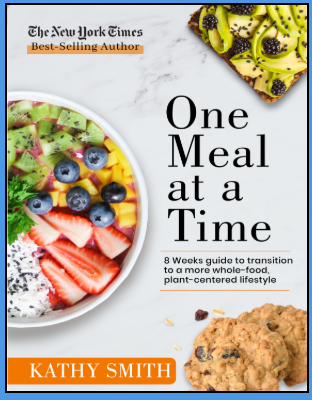
One Meal at a Time
• 8-week meal plan
• Breakfast, lunch, dinner
• Plant-based and traditional protein at every meal.
…and it’s easy to get started!
Today Only $14
Special Launch Price
400-page ebook • Access Instantly